
Heredity Biosciences LLP, Bhubaneswar
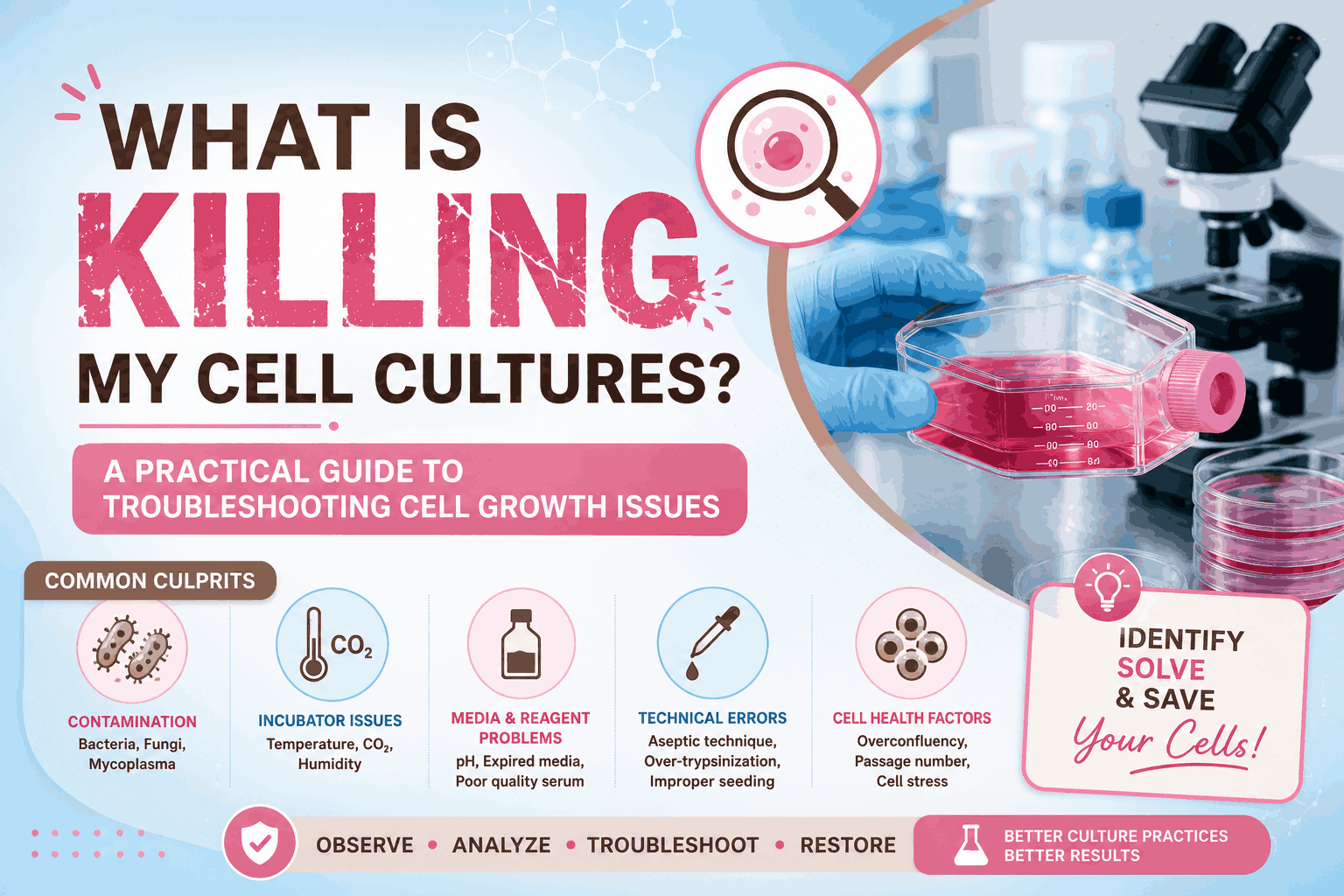
Cell culture is the foundation of modern biomedical research, regenerative medicine, cancer biology, drug discovery, and molecular diagnostics. Yet every researcher—from beginners to experienced scientists—has encountered a frustrating situation: healthy cells suddenly stop growing, detach from the culture surface, or die unexpectedly.
If your cultures are consistently failing, the problem is often not the cells themselves but the culture environment and laboratory practices. Identifying the root cause early can save valuable time, reagents, and research samples.
1. Microbial Contamination: The Silent Cell Killer
Microbial contamination remains the most common reason for cell culture failure. Bacteria, fungi, yeast, and mycoplasma compete with cultured cells for nutrients while releasing toxic metabolites that alter the culture environment.
Common signs
- Cloudy culture medium
- Rapid pH changes (yellow medium)
- Floating particles
- Fungal filaments
- Unusual cell morphology
- Reduced proliferation
Prevention
- Perform all procedures inside a certified biosafety cabinet.
- Sterilize surfaces before and after use.
- Use sterile pipettes, media, and consumables.
- Routinely monitor cultures for contamination.
2. Poor Aseptic Technique
Even a small lapse in sterile technique can introduce contaminants.
Common mistakes
- Frequent hand movement over open culture vessels
- Touching sterile pipette tips
- Improper bottle handling
- Leaving culture flasks open unnecessarily
- Excessive talking while working
Best practice
Develop consistent aseptic handling habits and minimize exposure of cultures to the external environment.
3. Incorrect Culture Medium
Cells require specific nutrients, amino acids, vitamins, glucose, growth factors, and serum.
Using an unsuitable medium can result in:
- Slow growth
- Morphological abnormalities
- Increased apoptosis
- Loss of viability
Always verify:
- Medium formulation
- Serum concentration
- Supplement quality
- Expiration dates
- Storage conditions
4. Temperature and CO₂ Instability
Most mammalian cells thrive at 37°C with 5% CO₂.
Small fluctuations in incubator conditions can alter cellular metabolism and growth.
Regularly monitor:
- Temperature
- CO₂ concentration
- Relative humidity
- Water pan cleanliness
Routine incubator calibration is essential for consistent results.
5. Improper Cell Seeding Density
Seeding density directly affects cell growth.
Too few cells
- Poor attachment
- Slow proliferation
- Increased stress
Too many cells
- Nutrient depletion
- Waste accumulation
- Contact inhibition
- Early senescence
Always seed cells according to the recommended density for each cell line.
6. Over-Trypsinization
Trypsin is essential for passaging adherent cells, but prolonged exposure damages cell membrane proteins and reduces viability.
Avoid
- Excessive incubation with trypsin
- Vigorous pipetting
- Delayed neutralization with serum-containing medium
Handle cells gently to maintain healthy cultures.
7. Media Not Changed Regularly
As cells grow, they consume nutrients and release metabolic waste.
Old culture media can lead to:
- Nutrient depletion
- pH imbalance
- Increased toxic metabolites
- Reduced cell proliferation
Follow the recommended media change schedule for each cell line.
8. Cross-Contamination Between Cell Lines
Working with multiple cell lines without proper precautions can lead to cross-contamination, resulting in incorrect experimental outcomes.
To minimize this risk:
- Handle one cell line at a time.
- Clearly label all culture vessels.
- Use dedicated reagents when possible.
- Authenticate cell lines periodically.
9. Mycoplasma Infection
Mycoplasma contamination is particularly problematic because it is usually invisible under routine microscopy.
It can alter:
- Gene expression
- Protein synthesis
- Cell metabolism
- Drug response
- Experimental reproducibility
Routine mycoplasma screening should be incorporated into every cell culture laboratory.
10. High Passage Number
Cells gradually accumulate genetic and phenotypic changes with repeated passaging.
High-passage cultures often exhibit:
- Reduced growth
- Altered morphology
- Decreased transfection efficiency
- Loss of experimental reproducibility
Maintain a master cell bank and avoid excessive passaging.
11. Poor Quality Reagents
Not all reagents perform equally. Variability in serum, media, enzymes, and supplements can significantly affect cell health.
Always:
- Purchase reagents from reputable suppliers.
- Store reagents according to manufacturer recommendations.
- Avoid repeated freeze–thaw cycles.
- Record lot numbers for traceability.
12. Mechanical Stress
Cells are surprisingly sensitive to physical stress.
Avoid:
- Vigorous pipetting
- Excessive centrifugation speeds
- Repeated aspiration
- Temperature shock
- Prolonged exposure outside the incubator
Gentle handling improves cell survival and consistency.
A Quick Cell Culture Health Checklist
Before blaming your cells, ask yourself:
- Is the culture free from contamination?
- Is the correct medium being used?
- Is the incubator functioning properly?
- Is CO₂ maintained at the correct level?
- Was the seeding density appropriate?
- Were cells exposed to trypsin for too long?
- Are media changes performed on schedule?
- Are reagents fresh and stored correctly?
- Is the cell line within an acceptable passage number?
- Are aseptic techniques being followed consistently?
If the answer to any of these questions is “No,” you have likely identified the cause of your cell culture problem.
Conclusion
Successful cell culture depends on precision, consistency, and careful observation. Most cell growth problems arise from preventable issues such as contamination, poor aseptic practices, incorrect culture conditions, or improper handling. By implementing standardized laboratory procedures, maintaining accurate documentation, and routinely monitoring culture conditions, researchers can significantly improve cell viability, reproducibility, and experimental success.
At Heredity Biosciences, in collaboration with Herrick Healthcare, we provide comprehensive hands-on training in mammalian cell culture, stem cell culture, molecular biology, and advanced laboratory techniques. Our programs are designed to help students, researchers, and healthcare professionals develop the practical skills needed to establish, maintain, and troubleshoot healthy cell cultures with confidence.
Start Your Career in Cell Culture & Molecular Biology!
Gain real laboratory experience through comprehensive hands-on training led by experienced scientists.
Heredity Biosciences LLP
Plot No. 818, Mayfair Lagoon Road,
Jayadev Vihar, Bhubaneswar, Odisha – 751013
📞 Call/WhatsApp: +91 9827301463 / +91 7381298980
📧 Email: hereditybioacademy@gmail.com
Limited Seats | Hands-on Training | Certificate Provided
Register Today!